Sovereignty, Scarcity, and Scandals: Q1 tracker reveals social media flashpoints in the 2026 vote
 By Yossabel Chetty, CINIA Researcher.
Date Range: 01/01/2026 – 31/03/2026
Political tensions and protests
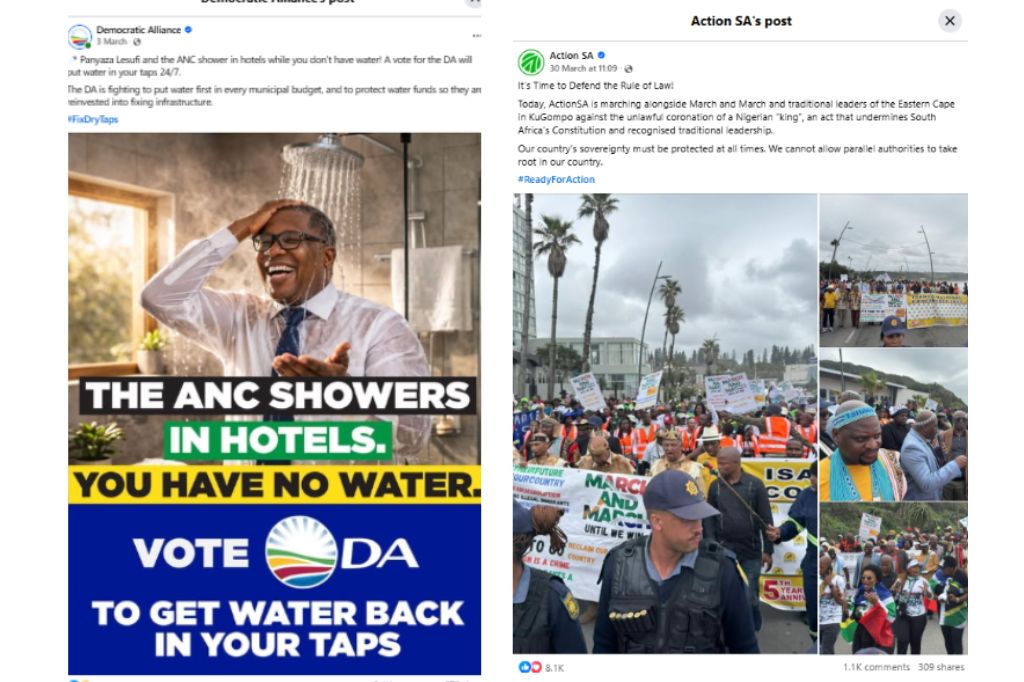
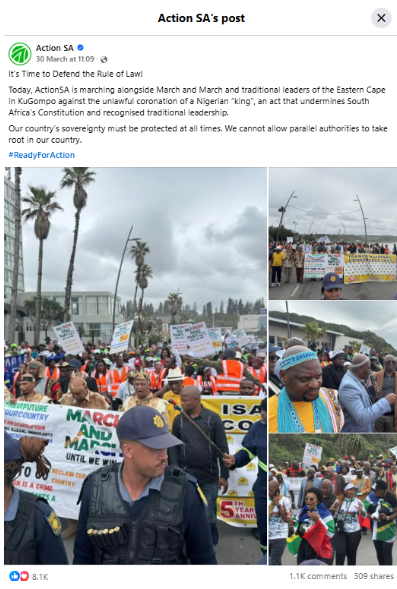
Political unrest flared up via social media in the first quarter, particularly in response to the alleged coronation of a Nigerian king in KuGompo City in the Eastern Cape at the end of March. Violent protests broke out as anti-foreigner groups drummed up support through traditional and social media. The sharing of flyers and a video of the event sparked outrage online, primarily driven by Vuyo Zungula of the African Transformation Movement (ATM), Jacinta Ngobese of March and March and ActionSA. “Sovereignty” was a frequently used word.
This event overshadowed another protest that turned chaotic and required police intervention in Durban on 25 March 2026. Jacinta Ngobese of March and March led the Durban protest.
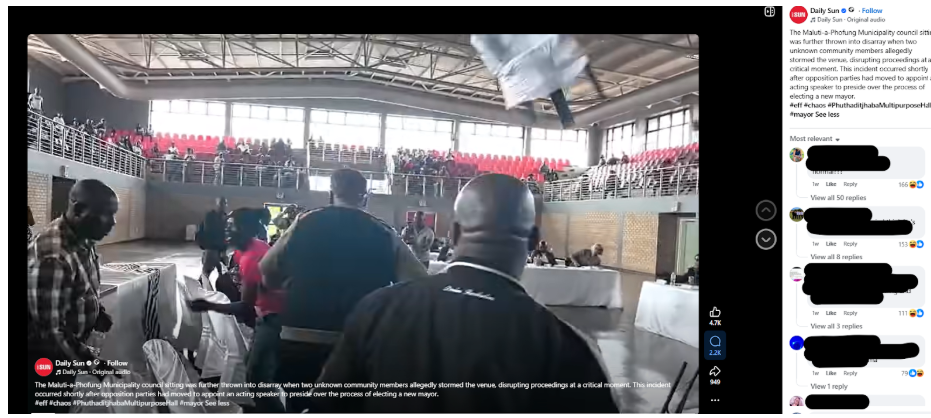
On 26 March 2026, in the Free State’s Maluti-a-Phofung, a municipality meeting was disrupted by two unidentified community members. This occurred at a time when the community was trying to replace its mayor. The Daily Sun posted a video of the disruption and received thousands of reactions in the form of likes, comments, and shares.

Water and Service Delivery Issues
There was a recurring theme of water crises and poor service delivery across various municipalities, notably within Johannesburg and Ekhuruleni. The ANC has been criticised for its handling of these issues, with the DA promising improvements. Following a comment by the ANC’s Panyaza Lesufi, the DA gained traction with its hashtags #fixdrytaps.
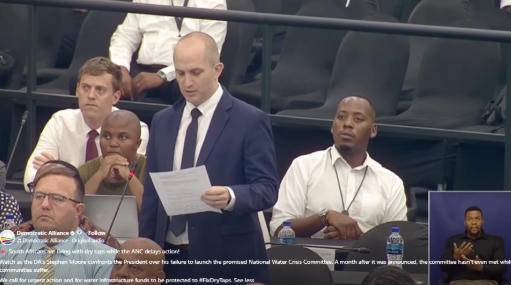
Stephen Moore of the DA confronted the ANC leadership about the failure to launch a National Water Crisis Committee.


Corruption
The ANC faces accusations of corruption and inefficiency from social media users across the country, with several mentions of financial mismanagement and scandals. Opposition parties in particular are leveraging these issues to gain ground in key localities within Johannesburg, kwaZulu-Natal and East London. The Xenophobic group Put South Africans First is using #corruption and #publicsafety to drive this topic about the ANC. The DA focus is on Johannesburg, with prominent campaign hashtags being #BelieveInJoburg and #GetJoburgWorking. At the moment, the ANC doesn’t appear to be addressing these concerns through social media. While much of the conversation is about the party, little of the conversation is by the ANC, unless pressed by opponents.


Coalition politics
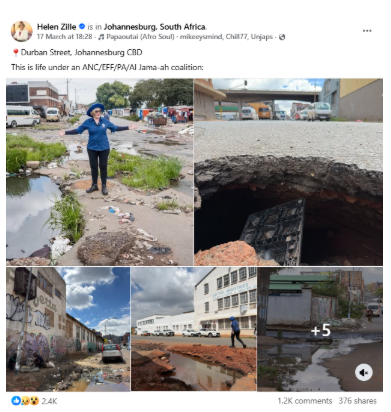
Based on mentions from this dataset, there is a sense that the ANC — already in a Government of National Unity following the 2024 national elections — will need to resort to coalitions to maintain power in an increasing number of municipalities, where they previously maintained a stronghold. This includes partnering with the Economic Freedom Fighters (EFF). A post by DA Johannesburg mayoral candidate Helen Zille on Facebook sparked discussion after she suggested what a coalition between the ANC/EFF/PA and Al-Jama-ah would mean for citizens in Johannesburg, showing pictures of potholes, sinkholes and abandoned buildings to refer to poor service delivery.
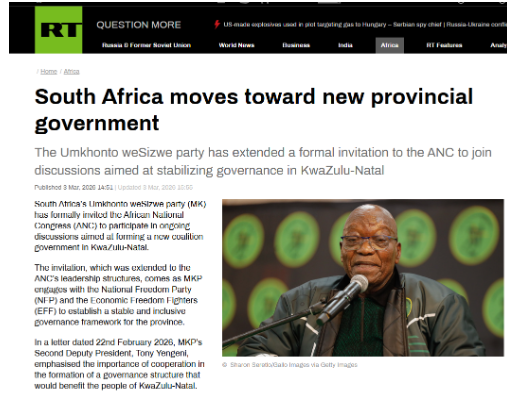
Controversial news media outlet RT (formerly Russia Today) also reported on an invitation that the MK Party extended to the ANC to participate in conversations aimed at forming a coalition in KwaZulu-Natal.
 ‘
Nationalism and anti-foreigner sentiment
There is a strong undercurrent of nationalism and anti-foreigner sentiment, particularly directed at Nigerian nationals and other foreign communities. Due to the extent of this conversation and the potential for violent outbreaks, Xenophobia will be tracked separately to allow a deeper reflection of the key people involved and some of the problematic narratives.
This quarterly tracker is amongst a series of reports being compiled by the Centre for Information Integrity in Africa in 2026. These reports are intended to inform local government bodies, the electorate, and the IEC about the progression of election narratives and to archive flare-ups so that, as we get closer to the elections, the practices and problematic content — and those who are driving it — are known. Social media listening results have been collected using a tool called SentiOne. This report was compiled by researcher Yossabel Chetty.