Digital harms demand Global South-led alternatives
By Janet Heard, CINIA Communications Practitioner.
Misinformation is not a new problem, but thanks to digital technology, it has exploded in “speed and scale”, says Helani Galpaya, CEO of LIRNEasia – a digital policy think tank spanning the Asia Pacific. Interviewed on the sidelines of the International Development Research Centre (IDRC)-CINIA partners workshop in Stellenbosch, she shared insights on how to effect change in our fractured information ecosystem.
Read more about her perspective in this interview by Janet Heard.
Digital technology has turbocharged an age-old problem: misinformation.
Helani Galpaya, CEO of LIRNEasia — a pro-poor, pro-market digital policy think tank covering the Asia Pacific – explained this on the sidelines of the inaugural International Development Research Centre (IDRC)-CINIA partners workshop in Stellenbosch.
“The technology has just made misinformation go further, and faster, so it’s a speed and scale problem now,” she said.
Traditional editorial gatekeeping once contained falsehoods within limited outlets. “It was a slower, more contained phenomenon. Now, with billions of users creating and consuming news, that control is gone,” said Galpaya.
Institutional safeguards have crumbled, with power now concentrated in a handful of mostly US-based platforms that resist oversight or accountability.
This hits the Global South hardest. “We are on those platforms. All our speech is taking place in a public sphere that is controlled by somebody else and is subject to the values of somebody else, mostly the US,” she said.
Governments, meanwhile, have abdicated their duty to ensure a digital public sphere[HG1] , handing it to profit-driven giants.
The recent “Undressing” controversy – in which Elon Musk’s Grok AI chatbox created and publicly shared at least 1.8 million nonconsensual sexualised images of women over nine unchecked days – was indicative of how low these platforms could go. Yet platforms shrugged off the human toll, especially on women and children.
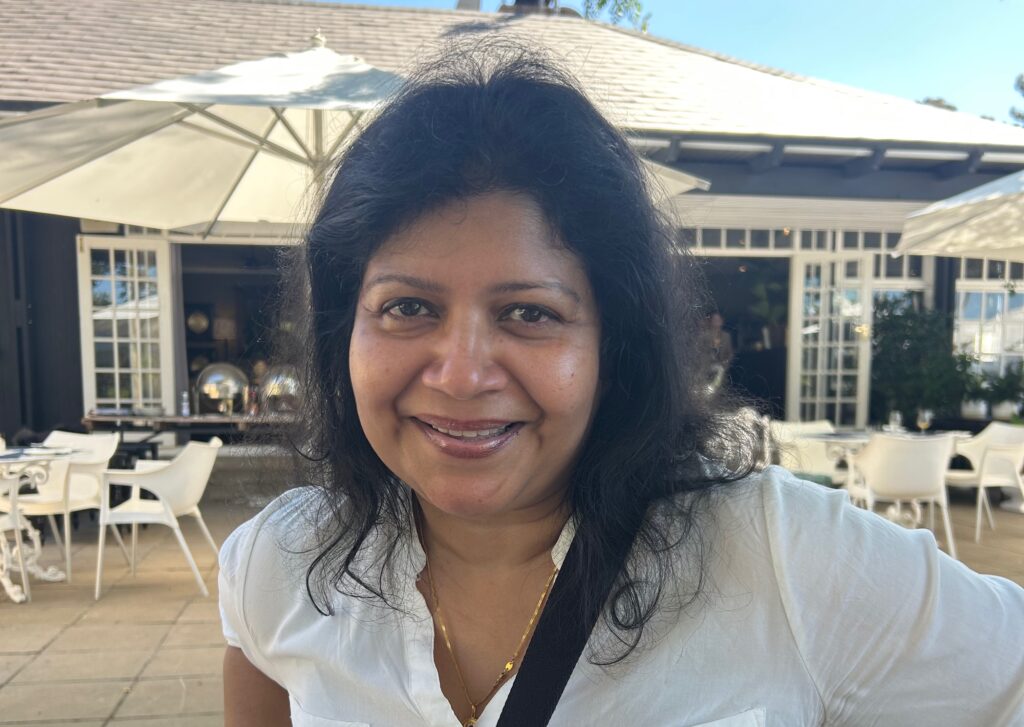
Helani Galpaya, CEO of LIRNEasia.
Fixing the internet’s flaws demanded a full ecosystem overhaul: mindset shifts, national laws, and platform rules. “The Internet is a system of communication. It’s hard to govern, but it has to be governed, like anything else,” she said. But governance tools are not just law and regulations – they also include norms, technologies, design choices, supplier (platform) actions. User actions are also an important component.
Firstly, there needed to be an acknowledgement of the human harm caused by social media and unchecked generative AI. Then, legal criminal justice mechanisms were needed. Above all, there needed to be an end to the “abdication of government responsibility to provide a public sphere for the people.”
The rise in authoritarianism has worsened things, with governments partnering with platforms for their own agendas, like tracking dissidents and controlling digital access, said Galpaya, who engages on issues related to meaningful internet access and the governance of data.
National fixes won’t cut it, she said, citing international agreements as essential, akin to the Law of the Sea Treaty for maritime rules.
Galpaya is sceptical of the United Nations’ track record but sees hope in the Global South’s estimated 70% share of global users. “Our purchasing power may not be as high as the global North, but I think Europe will join if we do this right, and say that we have rights and we don’t want this,” said Galpaya, who serves on multiple global data and Internet governance bodies.
Global negotiations on tech harms should echo climate talks, in which reparations were built into protections for human rights.
Currently, users face “choice architecture” traps. Quitting platforms seems impossible because digital communication is now a basic need, she said.
“During apartheid, one stopped buying South African products because consumers were made aware of the great harms inflicted on one group of people. Even if we know of the harms of platforms, I am not sure that’s an option anymore, because the platforms have so much power and consumers face few alternatives, that is where the public sphere is, so it is hard to leave.”
She said solutions should be introduced to ease switching — i.e., enabling users to make alternative choices and port data and history as they do with other consumer goods and services. “If I want to leave a particular platform , I should be able to, yet all my content is stuck there.”
She called on civil society and digital organisations to synergise with tech developers to prototype alternatives and break monopolies. “I am not under any illusion; it will be incredibly hard, but it is part of the solution – to reduce the power of existing platforms.”
Galpaya’s work involves research and engaging in public discourse on topics related to meaningful digital access, human rights online, changes to labour and skills in light of technology and climate change, and governance of platforms, data, and algorithms.
She was among delegates from multiple organisations and disciplines who gathered in Stellenbosch for the five-day summit, which aims to build synergy and impact within the IDRC partner network.